Subtotal $0.00
In Turkey, bread is not a side dish.
It’s not an afterthought. It’s not something you push to the edge of the plate.
Bread is sacred. It’s the foundation of every meal, the tool for scooping meze, the sopper of sauces, the vessel for grilled meats. The Turkish word for bread – ekmek – comes from the same root as “to feed” or “to nourish.” And that’s exactly what it does.
But not all Turkish breads are the same.
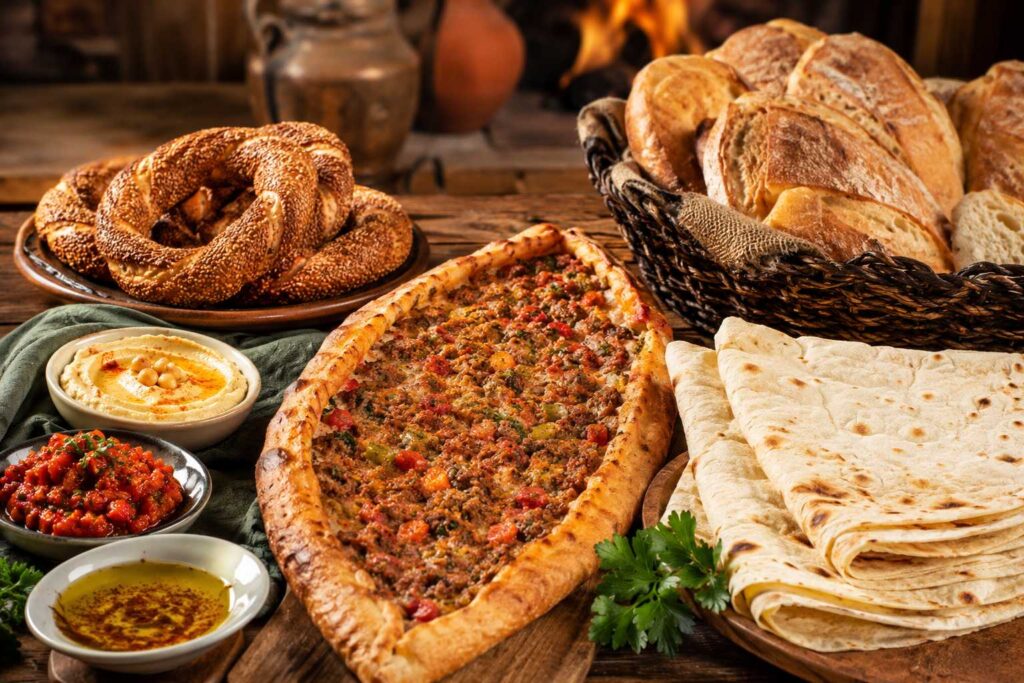
From the soft, thin lavash that wraps our Tantuni to the fluffy, canoe-shaped pide that soaks up lamb juices, from the sesame-crusted simit sold on every street corner to the crusty village bread served alongside meze – Turkey has a rich and diverse bread culture that deserves its own guide.
Here it is.
Why Bread Matters in Turkish Culture
Before we dive into the varieties, let’s talk about why bread is so important.
Respect for bread: In Turkish culture, bread is never thrown away. If a piece falls on the floor, it’s picked up, kissed, and placed somewhere higher – like a windowsill – to be fed to birds or animals.
Bread is life: The common Turkish saying “Ekmeksiz ev olmaz” means “A home without bread is not a home.”
Every meal includes bread: From breakfast to dinner, bread is on the table. It’s used to scoop meze, soak up stews, and wrap grilled meats.
With that respect in mind, let’s explore the wonderful world of Turkish breads.
The Essential Turkish Breads
1. Lavash – The Thin, Soft Wrapper
What it is: Lavash is a soft, thin flatbread made from flour, water, and salt. It’s rolled paper-thin and cooked quickly on a hot surface – traditionally a saj (a convex metal griddle). The result is a flexible, slightly chewy bread perfect for wrapping.
How it’s eaten:
- Wrapping Tantuni or döner
- Scooping meze (hummus, smoky eggplant, haydari)
- As a side for grilled meats
Where it’s from: Lavash is popular across Turkey, Armenia, Iran, and the Caucasus. In 2014, UNESCO added Lavash to its Intangible Cultural Heritage list.
At KAPYA: We use soft lavash for our Beef Tantuni and serve it alongside our Kebab Platter for wrapping grilled meats.
Best paired with: Tantuni, hummus, ezme, grilled kebabs
2. Pide – The Canoe-Shaped Flatbread
What it is: Pide is a soft, fluffy flatbread shaped like a canoe or boat. It’s made from a yeasted dough that rises, giving it a light, airy texture. The edges are folded over to create a rim, and the center can be plain or topped with cheese, meat, or eggs.
How it’s eaten:
- Plain, as a side for stews and grilled meats
- Topped with cheese or sucuk (Turkish sausage) as a “pide” (similar to a Turkish pizza)
- Tearing off pieces to dip into soups or sauces
Where it’s from: Pide is popular throughout Turkey, but the Black Sea region is particularly famous for its pide varieties.
At KAPYA: We serve fresh pide alongside our Braised Lamb Shank – perfect for soaking up the rich tomato sauce.
Best paired with: Lamb shank, lentil soup, slow-cooked stews
Variations:
- Kaşarlı pide – topped with shredded kaşar cheese
- Kıymalı pide – topped with spiced minced meat
- Sucuklu yumurtalı pide – topped with Turkish sausage and egg
3. Simit – The Sesame-Crusted Ring
What it is: Simit is a circular bread ring coated generously with sesame seeds. It has a chewy interior and a slightly crispy exterior, with a nutty flavor from the toasted sesame. Often called “Turkish bagel” – but it’s not a bagel. It’s lighter, crunchier, and addictive.
How it’s eaten:
- As a breakfast item with cheese, tomatoes, cucumbers, and tea
- As a quick snack from street vendors
- Sandwiched with cheese or jam
Where it’s from: Simit has been made in Istanbul since the 16th century. Today, you’ll find simit vendors on every corner of every Turkish city.
At KAPYA: While we’re known for lunch and dinner, we can prepare Turkish breakfast on weekends – and simit is always part of it. Contact us in advance to experience it.
Best paired with: Turkish tea, white cheese, honey, kaymak (clotted cream)
Fun fact: In some cities, simit is called gevrek – which literally means “crispy.”
4. Village Bread (Köy Ekmeği) – The Crusty Country Loaf
What it is: Köy ekmeği (village bread) is a rustic, crusty sourdough-style loaf made from whole wheat flour. Baked in stone ovens, it has a thick, crackly crust and a dense, chewy interior with a slightly tangy flavor.
How it’s eaten:
- Sliced thick, served with meze
- Dipped into olive oil and spices
- As a side for almost any meal
Where it’s from: Every village has its own version. The best village bread comes from traditional stone ovens, often baked by women in rural communities.
At KAPYA: We serve fresh village bread alongside our meze selection – perfect for scooping hummus, smoky eggplant, and haydari.
Best paired with: Hummus, smoky eggplant, olive oil, ezme
5. Bazlama – The Turkish Puffy Flatbread
What it is: Bazlama is a thick, puffy flatbread made from a simple yeast dough. It’s cooked on a griddle until golden brown with dark spots. The texture is soft, chewy, and slightly springy – almost like a thick tortilla or thin naan.
How it’s eaten:
- Grilled and brushed with butter
- Stuffed with cheese, spinach, or meat
- Served alongside eggs for breakfast
Where it’s from: Bazlama is traditional to central and western Turkey, especially rural areas where it’s baked fresh daily.
At KAPYA: We serve bazlama with our Turkish breakfast spread (available weekends by advance request).
Best paired with: Butter, honey, cheese, sucuk
6. Ramazan Pidesi – The Ramadan Bread
What it is: Ramazan pidesi is a special bread made only during the holy month of Ramadan. It’s a soft, round, puffy flatbread dotted with sesame seeds and nigella seeds (çörek otu). It has a distinctive diamond or crosshatch pattern pressed into the top.
How it’s eaten:
- Fresh and hot at iftar (the meal breaking the fast)
- With various meze, cheese, olives, and soups
Where it’s from: Throughout Turkey. Bakeries start making it specifically for Ramadan, and lines form hours before iftar.
At KAPYA: We don’t currently offer Ramazan pidesi, but it’s a beautiful tradition worth knowing about.
Turkish Breads at a Glance
| Bread | Texture | Best For | Iconic Feature |
|---|---|---|---|
| Lavash | Soft, thin, flexible | Wrapping meze or kebabs | UNESCO heritage |
| Pide | Fluffy, airy, canoe-shaped | Soaking up stews and sauces | Folded edges |
| Simit | Chewy, sesame-crusted | Breakfast with tea and cheese | Street vendor classic |
| Village Bread | Crusty, dense, tangy | Dipping in olive oil or meze | Stone-oven baked |
| Bazlama | Soft, puffy, chewy | Brushed with butter | Griddle-cooked |
| Ramazan Pidesi | Soft, dotted with seeds | Ramadan iftar | Diamond pattern |
How to Eat Turkish Bread with Your Meal
| Course | Best Bread | How to Use |
|---|---|---|
| Meze course | Village bread or lavash | Tear, scoop, eat |
| Soup course | Pide or village bread | Tear and dunk |
| Kebab course | Lavash or pide | Wrap the meat, scoop sauces |
| Lamb stew | Pide | Soak up every drop |
| Breakfast | Simit or bazlama | Cheese, honey, or jam on top |
| Tantuni wrap | Lavash | The only correct choice |
Turkish Bread at KAPYA
We take bread seriously at KAPYA.
- Lavash – Wraps our Beef Tantuni perfectly
- Pide – Served alongside our Braised Lamb Shank
- Village bread – Fresh with every meze spread
- Simit – Available with our weekend Turkish breakfast (advance request)
When you dine with us, don’t ignore the bread. It’s not a filler. It’s an essential part of the meal – and it’s delicious.
A Bread Lover’s Challenge
Next time you visit KAPYA, try this:
- Order a meze spread (hummus, smoky eggplant, haydari)
- Ask for extra village bread
- Before your kebabs arrive, spend ten minutes scooping, dipping, and savoring
- Notice how the bread changes the experience
Bread isn’t just food. It’s culture. History. Hospitality.
And in Turkey, it’s love.
Şerefe – to bread, and to the hands that make it.