Subtotal $0.00
Is Turkish food healthy?
It’s a question we hear often. And the answer is a resounding yes – with a few important caveats.
Turkish cuisine is naturally aligned with the Mediterranean diet, consistently ranked by nutritionists as one of the healthiest ways to eat in the world. In fact, the Mediterranean diet has been recognized by UNESCO as an Intangible Cultural Heritage of Humanity.
But not every Turkish dish is created equal. Let’s break down what makes Turkish food healthy, what to watch out for, and which dishes to order at KAPYA.
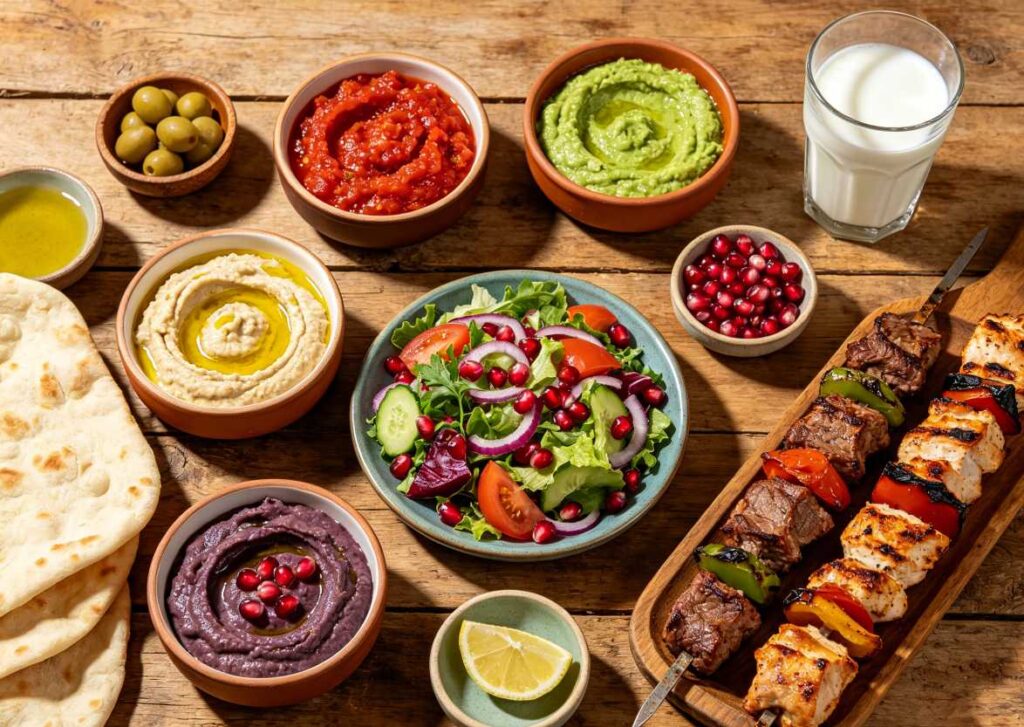
What Is the Mediterranean Diet?
The Mediterranean diet is based on the traditional eating habits of countries bordering the Mediterranean Sea – including Turkey, Greece, Italy, and Spain.
Key principles:
| Food Group | How Often |
|---|---|
| Olive oil | Daily – the primary fat source |
| Vegetables, fruits, legumes, nuts | Daily – abundant and varied |
| Whole grains (bread, bulgur, rice) | Daily – in moderation |
| Fish and seafood | At least twice a week |
| Poultry, eggs, cheese, yogurt | Weekly – in moderate portions |
| Red meat | Occasionally – not daily |
| Sweets | Rarely – reserved for special occasions |
| Red wine | Optional – in moderation with meals |
The Mediterranean diet is not a strict “diet” in the weight-loss sense. It’s a pattern of eating – one that emphasizes fresh, whole ingredients, healthy fats, and mindful portions.
Why Turkish Food Naturally Aligns with the Mediterranean Diet
Turkish cuisine developed along the Mediterranean coast. It shares the same olive groves, the same fresh vegetables, the same love of seafood and grilled meats.
Here’s how Turkish food maps to Mediterranean diet principles:
1. Olive Oil Is Everywhere
Turkey is one of the world’s largest producers of olive oil. It’s used in meze, salad dressings, marinades, and cooking.
Why it’s healthy: Olive oil is rich in monounsaturated fats and antioxidants. It’s associated with lower risk of heart disease, stroke, and certain cancers.
At KAPYA: Our Hummus, Baba Ghanoush, and Ezme are all finished with olive oil. The Turkish Shepherd Salad is dressed with lemon vinaigrette. We don’t skimp.
2. Vegetables Are Front and Center
Turkish cuisine features vegetables in every course – from meze to mains.
Why it’s healthy: Vegetables provide fiber, vitamins, minerals, and antioxidants. They’re naturally low in calories and high in volume.
At KAPYA: Baba Ghanoush (smoked eggplant), Ezme (tomato and pepper salad), Tursu (pickled vegetables), Turkish Shepherd Salad, Kisir Salad, and grilled vegetables with kebabs.
3. Yogurt Is a Staple
Yogurt appears throughout Turkish cuisine – as a side, as a sauce, as a drink (ayran), and as a base for dips.
Why it’s healthy: Yogurt is rich in protein, calcium, and probiotics – good for digestion, bones, and gut health.
At KAPYA: Haydari (thick yogurt with mint and sun-dried tomato), Cacık (included in meze selection), Pemble Sultan (beetroot with yogurt and honey), Ayran (yogurt drink), yogurt sauce with Beef Manti and Adana Kebabs.
4. Lean Meats Are Grilled, Not Fried
Turkish kebabs are charcoal-grilled – not deep-fried, not pan-fried in heavy oils.
Why it’s healthy: Grilling allows fat to drip away rather than being absorbed. No breading. No heavy batters. Just meat, fire, and smoke.
At KAPYA: Lamb Shish Kebabs, Chicken Shish Kebabs, Adana Kebabs, Beef Shish Kebabs, Kapya’s Kebab Platter – all charcoal-grilled.
5. Seafood Is Celebrated
Turkey has coastlines on the Mediterranean, Aegean, and Black Seas. Seafood is a proud part of the cuisine.
Why it’s healthy: Fish is rich in omega-3 fatty acids, high-quality protein, and essential nutrients.
At KAPYA: Char-grilled Whole Seabass (550g) – simple preparation with pickled fennel, tomato salsa, arugula salad, and baby potatoes.
6. Legumes, Bulgur, and Grains Add Fiber
Lentils, chickpeas, bulgur, and rice are common in Turkish cooking.
Why it’s healthy: Legumes and whole grains are rich in fiber, protein, and complex carbohydrates – keeping you full and satisfied.
At KAPYA: Mercimek Çorbası (red lentil soup), Hummus (chickpeas), Kisir Salad (fine bulgur wheat), Bulgur-Mushroom Fried Rice.
7. Herbs and Spices Replace Salt
Turkish cooking uses fresh herbs (parsley, dill, mint) and spices (sumac, cumin, paprika, mint) generously – reducing the need for salt.
Why it’s healthy: Less sodium. More flavor. Plus, spices have their own antioxidant properties.
At KAPYA: Ezme is bright with parsley. Sumac adds tang without salt. Mercimek Çorbası features roasted mint. Our spice blends are flavorful without being heavy.
Health Benefits of Eating Turkish Food
| Benefit | How Turkish Food Helps |
|---|---|
| Heart health | Olive oil, fish, nuts, and limited red meat |
| Weight management | High fiber, high protein, low processed ingredients |
| Gut health | Yogurt, pickled vegetables (Tursu), fresh vegetables |
| Reduced inflammation | Olive oil, vegetables, spices |
| Blood sugar control | Whole grains (bulgur), legumes, limited refined sugar |
What to Watch Out For
Not all Turkish food is equally healthy. Here are a few things to enjoy in moderation:
| Dish | Why in Moderation | Healthier Alternative |
|---|---|---|
| Güraç Tatlısı | Fresh ricotta, banana, grape molasses – delicious but sweet | Share with the table |
| Kataifi Cannoli | Turkish coffee cream, rose syrup – a treat | Save for special occasions |
| Sütlaç | Rice pudding with osmanthus syrup – naturally sweet | Share with the table |
| Fried items (Sigara Böreği, Fried Lamb Liver, Fish Fingers) | Deep-fried | Choose grilled or baked instead (kebabs, seabass) |
| Lavash bread | Refined carbohydrates | Enjoy in moderation – it’s meant to accompany meze, not be the meal |
The good news: Most Turkish food is naturally healthy. The unhealthy exceptions are usually obvious – and they’re often desserts or fried appetizers.
Healthy Dishes to Order at KAPYA
Here are our recommendations for a delicious, satisfying, and health-conscious meal:
Starters (Soups & Meze)
| Dish | Why It’s Healthy |
|---|---|
| Mercimek Çorbası (Red Lentil Soup) | Red lentils, roasted mint, paprika oil – fiber and plant protein |
| Hummus | Chickpeas + tahini + olive oil – fiber and healthy fats |
| Baba Ghanoush | Smoked eggplant, Kapya pepper, olive oil – low calorie, high flavor |
| Haydari | Thick yogurt with mint and sun-dried tomato – protein and probiotics |
| Ezme | Tomato, onion, green pepper, sumac, parsley – almost all vegetables |
| Turkish Shepherd Salad | Tomato, cucumber, pepper, onion, parsley, lemon vinaigrette – fresh and light |
| Kisir Salad | Fine bulgur wheat, lettuce, peach, avocado, carrot, red cabbage – fiber-rich |
| Tursu (Pickled vegetables) | Fermented vegetables – probiotics and low calorie |
Main Courses
| Dish | Why It’s Healthy |
|---|---|
| Char-grilled Whole Seabass (550g) | Lean protein, omega-3s, simple preparation with vegetables |
| Chicken Shish Kebabs | Lean poultry, charcoal-grilled, served with tomato cucumber salad and lavash |
| Lamb Shish Kebabs | Higher in fat but high-quality, grilled, served with potato puree and yogurt |
| Sauteed Beef “Ali Nazik Style” | Angus beef cubes with sautéed mushrooms, onions, peppers, and garlic yogurt – protein-rich |
| Beef Manti | Turkish dumplings with yogurt sauce – satisfying in moderation |
Sides (Choose Wisely)
| Side | Why It’s Healthy |
|---|---|
| Sauteed Broccolini | Green vegetable with parmesan – fiber and vitamins |
| Beğendi (Char-roasted eggplant puree) | Eggplant with truffle oil – low calorie, high flavor |
| Mashed Potatoes | With feta crumble and paprika oil – enjoy in moderation |
Drinks
| Drink | Why It’s Healthy |
|---|---|
| Ayran | Yogurt drink – protein, probiotics, hydration |
| Turkish Tea | Antioxidants, no sugar (unless you add it) |
| Turkish Coffee | Antioxidants, metabolism boost – one cup is enough |
The Healthiest Meal Combo
For a balanced, healthy meal at KAPYA (for 2 people sharing):
- Start (share): Mercimek Çorbası (red lentil soup)
- Meze (share 2-3): Hummus, Baba Ghanoush, Turkish Shepherd Salad
- Main (share): Char-grilled Whole Seabass or Chicken Shish Kebabs
- Side (share): Sauteed Broccolini
- Drink: Ayran or Turkish tea
- Dessert (optional): Skip or share one Sütlaç
What About Calories?
We don’t publish calorie counts – because healthy eating isn’t just about numbers. But for those who track:
| Dish (approximate) | Calories |
|---|---|
| Mercimek Çorbası (bowl) | ~150 |
| Hummus (2 tbsp) | ~70 |
| Baba Ghanoush (2 tbsp) | ~50 |
| Turkish Shepherd Salad (side) | ~80 |
| Chicken Şiş (150g) | ~250 |
| Lamb Şiş (150g) | ~350 |
| Char-grilled Seabass (half fish) | ~300 |
| Ayran (250ml) | ~100 |
| Sütlaç (single serving) | ~200-250 |
These are estimates. Actual values vary by preparation.
Turkish Food vs. Other Cuisines – Health Comparison
| Cuisine | Typical Cooking Method | Common Ingredients | Health Rating |
|---|---|---|---|
| Turkish | Grilled, baked, simmered | Olive oil, yogurt, vegetables, lean meat | ★★★★☆ |
| Mediterranean | Grilled, raw, baked | Olive oil, fish, vegetables | ★★★★★ |
| Chinese (typical) | Stir-fried, deep-fried | Soy sauce, oil, rice, varied meats | ★★★☆☆ |
| American (fast food) | Deep-fried, grilled (with additives) | Processed meats, cheese, sugar | ★☆☆☆☆ |
| Japanese | Raw, steamed, grilled | Fish, rice, vegetables, soy | ★★★★☆ |
Turkish food holds its own among the world’s healthier cuisines.
What Nutritionists Say About the Mediterranean Diet
The Mediterranean diet has been extensively studied. Here’s what research shows:
- Reduced risk of heart disease (New England Journal of Medicine, 2013)
- Lower rates of type 2 diabetes (Diabetes Care, 2011)
- Improved cognitive function (JAMA Internal Medicine, 2015)
- Longer life expectancy (British Medical Journal, 2014)
Turkish food, as part of the Mediterranean tradition, shares these benefits.
Eat Well at KAPYA
You don’t have to sacrifice flavor to eat healthy. At KAPYA, we believe good food nourishes the body and the soul.
- Olive oil, not butter
- Charcoal fire, not deep fryer
- Fresh vegetables, not processed ingredients
- Yogurt, not heavy cream
Come taste the difference. Your taste buds – and your body – will thank you.
Contact Details
📍 Find us: 479-1 Wuding Lu, near Jiangning Lu, Jing’an District
🕒 Open daily: 11:30 – 23:30
📞 Reserve: +86-181-0188-1428
📷 Instagram: @kapya_restaurant